
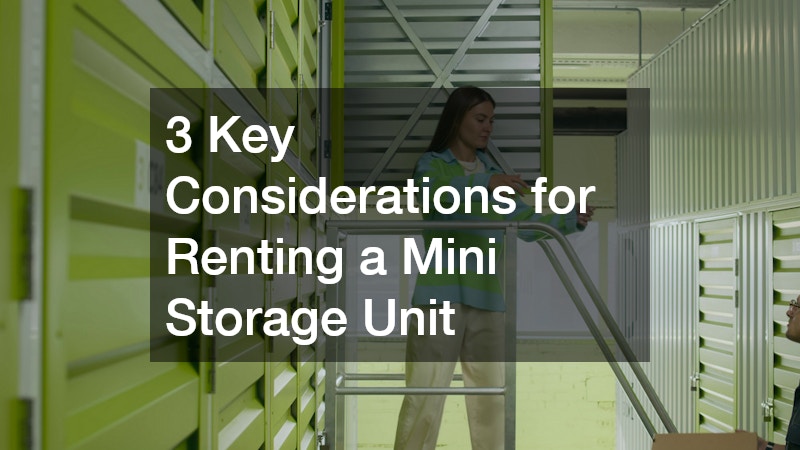
Finding extra space is a common challenge, whether you are downsizing, relocating, or simply trying to declutter your home or office. Renting a mini storage unit can be a practical and cost-effective solution, but not all storage situations are the same. Before signing a lease, it is important to think beyond price and availability. The right decision depends on how you plan to use the space, how long you need it, and how well the facility supports your specific requirements. Understanding a few core considerations upfront can help you avoid unnecessary stress and expenses later.
Choosing the Right Size and Layout
One of the first decisions renters face is determining how much space they truly need. Many people underestimate or overestimate their storage requirements, which can lead to wasted money or cramped conditions that make accessing items difficult. The goal is to find a unit that comfortably fits your belongings while allowing for safe movement and organization.
Start by taking inventory of what you plan to store. Furniture, seasonal items, business inventory, and personal keepsakes all take up space differently. Large items such as sofas or appliances may require more square footage, but can often be stacked efficiently. Smaller items stored in uniform boxes can be arranged more tightly, especially if shelving is allowed.
Layout matters just as much as size. A slightly larger unit may be worthwhile if it provides better access to frequently used items. If you expect to retrieve things regularly, you will want space to create clear walkways rather than stacking everything wall to wall. For long-term storage where access is rare, a tighter fit may be acceptable.
Location, Access, and Convenience
Convenience plays a major role in how satisfied you will be with your storage experience. The location of the facility should align with how often you plan to visit and how far you are willing to travel. A unit close to home or work is ideal for frequent access, while a more distant location may be acceptable for items you rarely need.
Access hours are another critical factor. Some facilities offer round-the-clock entry, while others restrict access to standard business hours. If you anticipate needing items early in the morning or late at night, limited access could become a frustration. Make sure the facility’s schedule fits your lifestyle and work habits.
Ease of loading and unloading is often overlooked but has a major impact on usability. Ground-level units, wide driveways, and covered loading areas can make a significant difference, especially when moving heavy or bulky items. Elevators and carts are helpful features in multi-level facilities, but they can also slow things down during busy periods.
Security, Climate, and Long-Term Value
Protecting your belongings should be a top priority when renting storage space. Security features vary widely, so it is important to understand what measures are in place. Gated access, surveillance cameras, and on-site staff all contribute to a safer environment. While no system is perfect, multiple layers of security provide greater peace of mind.
Climate control is another key consideration, especially for sensitive items. Electronics, wooden furniture, documents, and photographs can all be damaged by extreme temperatures or humidity. If you plan to store valuables or items with sentimental importance, a climate-controlled mini storage unit may be worth the additional cost. This option helps maintain stable conditions year-round, reducing the risk of warping, mold, or deterioration.
Cost should always be evaluated in terms of value, not just the monthly rate. Lower-priced units may come with trade-offs such as limited access, minimal security, or poor maintenance. On the other hand, paying slightly more for better features can prevent losses and inconveniences that cost far more in the long run.
Renting storage space is more than a simple transaction. It is a decision that affects how safely and conveniently your belongings are stored for weeks, months, or even years. By carefully evaluating size, location, access, security, and overall value, you can choose a solution that truly fits your needs. Taking the time to plan ahead ensures that your mini storage unit works as a reliable extension of your home or business, not a source of ongoing frustration. A thoughtful choice today can simplify future transitions, protect valuable items, and support changing priorities.
