
Sealcoating can help protect asphalt surfaces while giving driveways, parking lots, and other paved areas a darker, refreshed appearance. However, the quality of the finished surface depends heavily on preparation, materials, application methods, and weather conditions.
Choosing the right contractor is therefore an important part of the project. Experienced pavement contractors should evaluate the existing asphalt, address necessary repairs, prepare the surface thoroughly, and explain what homeowners or property managers should expect after application.
Understand What Sealcoating Can and Cannot Do
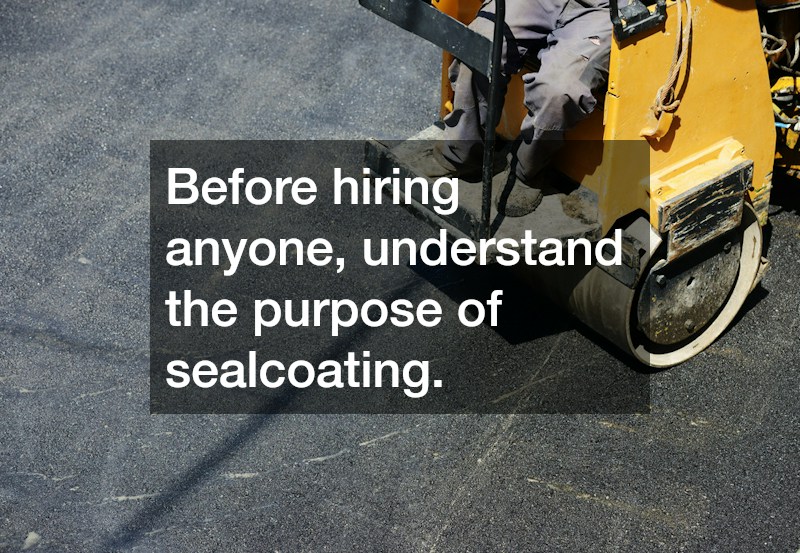
Before hiring anyone, understand the purpose of sealcoating.
Sealcoat creates a protective surface layer over asphalt. It can help shield pavement from sunlight, water, automotive fluids, and normal weather exposure while improving appearance.
However, sealcoating is not a structural repair.
Large cracks, potholes, crumbling pavement, drainage problems, and significant base failures cannot simply be covered with sealcoat. Those issues may need repair first.
Reputable pavement contractors should evaluate the condition of the asphalt before recommending the service.
Look for Experience With Sealcoating
Paving and pavement maintenance include many different services, so ask whether the contractor regularly performs sealcoating.
Experienced contractors understand how pavement condition, temperature, humidity, surface preparation, and application thickness can affect the finished result.
They should also know how to work around curbs, sidewalks, buildings, landscaping, and pavement markings.
Ask how long the company has performed this type of work and whether it regularly handles properties similar to yours.
Ask About Surface Preparation
Good preparation is one of the most important parts of sealcoating.
The asphalt should generally be cleared of dirt, loose material, vegetation, and other debris before the coating is applied. Oil spots and other contaminants may require additional treatment.
Cracks may also need attention beforehand.
Simply applying sealcoat over an unprepared surface can interfere with adhesion and lead to disappointing results.
Ask potential pavement contractors to explain exactly how they prepare the pavement before application. A thorough answer can tell you a great deal about the quality of the proposed work.
Find Out How Cracks Will Be Handled
Asphalt naturally develops cracks over time.
Some cracks may be suitable for filling or sealing before the sealcoat is applied. This can help reduce the amount of water entering the pavement through those openings.
However, not every crack indicates the same problem.
Widespread alligator cracking, sinking areas, or large structural failures may require more substantial repairs.
A contractor should distinguish between routine crack treatment and damage that sealcoating cannot correct.
Ask What Product Will Be Used
Sealcoating materials can differ in composition, performance characteristics, and application requirements.
Ask the contractor what product is being proposed and why it is appropriate for the property.
The company should be able to provide basic information about the material and the manufacturer’s recommended application process.
Be cautious if a contractor cannot explain what is being applied to your pavement.
Experienced pavement contractors should also understand how the selected material needs to be mixed, applied, and cured.
Discuss the Number of Coats
The proposed number of coats can vary depending on the pavement and product being used.
Some projects may involve multiple applications rather than one heavy coat.
Ask how many coats are included in the estimate and how they will be applied.
More material is not automatically better. Applying sealcoat too heavily can create its own problems.
The application should follow appropriate specifications for the product and surface rather than simply trying to create the thickest possible layer.
Consider the Weather
Weather has a major influence on sealcoating.
Temperature, humidity, rain, and sunlight can all affect application and curing.
Contractors should schedule work when weather conditions are appropriate for the product being used. Applying sealcoat immediately before rain or during unsuitable temperatures can interfere with the final result.
Ask the contractor what conditions are needed before work begins and what happens if the forecast changes.
Professional pavement contractors should be prepared to postpone the project when weather could compromise the application.
Ask About Drying and Curing Time
You will need to keep vehicles and, in some cases, foot traffic off the pavement after sealcoating.
Ask exactly how long the contractor recommends waiting before reopening the surface.
The required time can vary with the product, temperature, humidity, shade, and other environmental conditions.
For commercial properties, this becomes especially important because parking and traffic may need to be redirected.
A contractor should help establish a practical plan for keeping vehicles away from newly treated areas until they are ready for use.
Verify Insurance and Business Credentials
Before hiring a contractor, ask about appropriate insurance and any licensing or registration requirements that apply in your area.
Requirements differ between jurisdictions and project types.
Proper insurance is particularly important when contractors are operating equipment or working around vehicles, buildings, customers, or employees.
Established pavement contractors should be willing to discuss their business credentials and provide documentation when appropriate.
Request a Detailed Written Estimate
A written estimate should make it clear what you are purchasing.
The proposal may identify the area being treated, preparation work, crack treatment, sealcoating material, number of coats, traffic control, and any pavement marking work.
It should also explain the overall price and payment terms.
For larger commercial projects, ask whether different sections of the parking area will be completed in stages.
Detailed estimates make it easier to compare contractors based on actual scope rather than price alone.
Do Not Choose Solely on the Lowest Price
Sealcoating prices can vary between companies, but the least expensive quote is not automatically the best value.
One contractor may include extensive cleaning and crack preparation while another proposes applying coating with minimal preparation.
Products and application methods may differ as well.
Ask questions when estimates vary significantly.
Comparing the complete scope offered by different pavement contractors can help explain why one quote costs more than another.
Ask for References or Previous Projects
Previous work can provide useful insight into a contractor’s experience.
Ask whether the company can provide references or examples of completed sealcoating projects.
For commercial work, you may want examples of parking lots similar in size or traffic volume to your property.
Online reviews can also reveal patterns involving communication, scheduling, reliability, and workmanship.
Look at the overall pattern of feedback rather than relying on a single review.
Discuss Pavement Markings
Commercial parking lots often need new pavement markings after sealcoating.
Parking spaces, accessible areas, directional arrows, loading zones, fire lanes, and other markings may need to be repainted once the surface is ready.
Ask whether striping is included in the contractor’s services and estimate.
If a separate company will handle markings, make sure the schedules are coordinated so paint is not applied before the sealcoat has cured sufficiently.
Ask How Surrounding Areas Will Be Protected
Sealcoating should stay on the asphalt rather than surrounding surfaces.
Contractors may need to protect concrete curbs, garage doors, walls, sidewalks, landscaping, or other nearby areas from overspray or splatter.
Ask what precautions will be taken before application starts.
Experienced pavement contractors should plan their work carefully around adjacent materials and structures.
Understand the Maintenance Plan
Sealcoating is part of ongoing pavement maintenance rather than a one-time solution for every asphalt problem.
Ask the contractor how often your particular surface should be evaluated and what signs of deterioration you should monitor.
Cracks should generally be addressed before they develop into larger openings, and drainage problems should be corrected rather than repeatedly covered.
Routine inspections can help property owners identify pavement problems before they become more extensive.
Hire a Contractor Who Explains the Process
A good sealcoating contractor should be able to explain what condition your asphalt is in, what preparation is necessary, what product will be applied, and how long the surface needs before normal use resumes.
Take time to compare estimates, experience, preparation procedures, and customer feedback.
Qualified pavement contractors understand that successful sealcoating depends on much more than spreading a dark coating across asphalt. Careful surface preparation, appropriate materials, favorable weather, and proper application all contribute to a better result.
By researching contractors before hiring, property owners can make a more informed decision and choose a pavement maintenance approach designed to protect their asphalt rather than simply improve its appearance temporarily.
