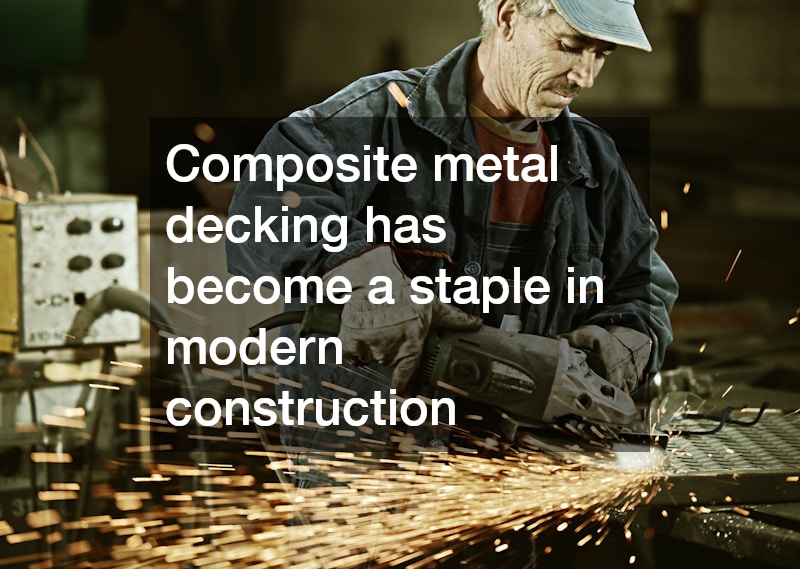
Composite metal decking has become a staple in modern construction, offering architects and builders an efficient solution for creating both durable and versatile structures. This material serves as a key element due to its ability to integrate structural performance with design flexibility. The advent of composite metal decking provides significant advantages over traditional materials, making it an essential component in various construction projects, ranging from skyscrapers to residential buildings.
1. What Are the Advantages of Composite Metal Decking?
1.1. Structural Efficiency
Composite metal decking is a remarkable component in the construction sector due to its superior load-bearing capabilities. It effectively distributes the weight across its surface, reducing the amount of structural support needed, thus optimizing material usage.
This efficiency contributes to less material shipment, reducing both cost and environmental impact, which is particularly beneficial for large-scale projects. Additionally, the interlocking nature of composite metal decking enhances the overall rigidity and integrity of the structure, ensuring long-term performance and safety. Understanding the physics behind this efficiency provides a clear rationale for its preference over non-composite options.
1.2. Cost-Effectiveness
One of the standout benefits of composite metal decking is its cost-effectiveness over the lifespan of a building. The initial installation costs, which may appear high, are offset by reduced maintenance needs compared to traditional materials. Since composite metal decking requires fewer labor efforts due to its simplicity in installation, labor costs are significantly minimized. Over time, the durability and low need for repairs make it a cost-saving option for developers and property owners alike. Furthermore, the expedited construction timeframe can lead to even more savings, accommodating faster project completion and earlier occupancy.
1.3. Versatility in Applications
Composite metal decking proves to be incredibly adaptable for a variety of construction applications, making it an unparalleled choice for diverse project needs. From high-rise buildings to parking structures, it can be tailored to suit specific engineering requirements. Its versatility extends to all sorts of architectural styles, easily integrating into both contemporary and traditional design frameworks. This adaptability also means that composite metal decking can serve niche markets, like stadiums or bridges, where customized solutions are crucial. The material’s performance strength simplifies the complex engineering challenges often encountered in specialized constructions.
2. How Is Composite Metal Decking Manufactured?
2.1. Material Composition
The composition of composite metal decking involves primarily steel, which is coated for rust resistance, paired with a reinforced concrete overlay. This combination not only strengthens the material but also extends its lifespan by resisting environmental elements. The steel provides the necessary foundation for bearing weight, while the concrete layer helps disperse the load uniformly. By utilizing pre-galvanized and recycled steel, manufacturers can produce a product that upholds sustainability principles while retaining superior quality. This blend of materials paves the way for composite metal decking to outperform its traditional counterparts in various facets.
2.2. Production Techniques
Advanced manufacturing techniques play an essential role in the production of composite metal decking, ensuring that each piece is crafted to perfection. Automation has introduced precision and efficiency into the manufacturing process, allowing for high degrees of customization. For instance, roll-forming techniques have enabled the production of decking with complex profile shapes to meet specific structural demands. State-of-the-art machinery ensures that the metal sheets are consistently cut, shaped, and embossed before receiving their concrete overlay. Consistency in production translates to a reliable performance at the construction site, regardless of the project’s scale.
2.3. Quality Control Measures
During manufacturing, rigorous quality control measures are essential to ascertain the structural integrity of composite metal decking. Quality checks involve various stages, including the inspection of raw materials and evaluation of finished products. Manufactures use mechanical testing to assess tensile strength, ensuring the decking will withstand practical loads. Additionally, non-destructive testing methods, such as ultrasonic and radiographic testing, are employed to identify potential flaws without damaging the product. Emphasizing quality control results in products that not only meet but exceed industry standards, providing peace of mind to end-users and stakeholders alike.
3. What Are the Environmental Benefits of Composite Metal Decking?
3.1. Sustainability in Materials
The use of recycled materials in the manufacturing of composite metal decking represents a significant stride towards sustainability within the construction industry. By leveraging recycled steel, manufacturers mitigate the environmental impact associated with mining new raw materials. This reduction in sourcing new resources contributes positively to conserving natural landscapes and reducing carbon footprints. Moreover, the longevity and durability of composite metal decking minimize the frequency of replacements, aligning with eco-friendly practices. Sustainability is further enhanced as the end product is fully recyclable, ensuring that it does not contribute to landfill waste at its life end.
3.2. Energy Efficiency
A noteworthy aspect of composite metal decking is its energy efficiency throughout its lifecycle, from production to completion of construction projects. The energy-intensive processes of steel production are offset by the use of high-efficiency equipment and manufacturing methods that reduce unnecessary energy consumption. Additionally, the reflective properties of coated steel help in maintaining cooler building environments, potentially reducing the need for excessive air conditioning. Over time, this energy-efficiency results in fewer greenhouse gas emissions, aligning the construction projects utilizing composite metal decking with global sustainability targets. The construction industry is thus empowered to meet green building certifications and offer better living spaces.
Composite metal decking emerges as an innovative solution in modern construction, with its plethora of advantages spanning from structural efficiency and economic benefits to environmental sustainability. It represents a fusion of advanced engineering and environmental stewardship, bringing about significant advancements in building practices. As architects and builders increasingly adopt composite metal decking, they benefit from its versatility, quality, and ability to meet modern construction demands. This material not only paves the way for impressive architectural designs but also ensures that these constructions are sustainable for future generations. Thus, composite metal decking supply continues to revolutionize the industry, providing a superior choice for durable and eco-friendly construction.
Composite metal decking has become a staple in modern construction, offering architects and builders an efficient solution for creating both durable and versatile structures. This material serves as a key element due to its ability to integrate structural performance with design flexibility. The advent of composite metal decking provides significant advantages over traditional materials, making it an essential component in various construction projects, ranging from skyscrapers to residential buildings.