
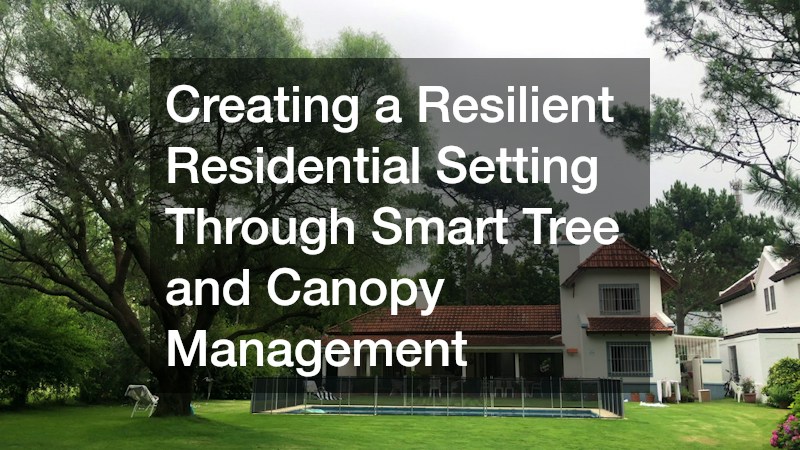
A balanced, healthy tree canopy represents one of the most structurally and financially valuable assets on any residential parcel. Mature deciduous hardwoods and towering evergreen stands offer natural climate buffers, shielding building envelopes from blistering summer solar heat and diverting fierce winter gales away from exterior walls. Beyond lowering household utility costs, healthy trees provide essential soil stabilization along slopes, capture stormwater runoff within complex root zones, and anchor overall landscape architecture with organic grandeur. When properly nourished and monitored, a robust overhead canopy creates an immediate impression of permanence and natural luxury that significantly enhances market desirability, appraisal equity, and neighborhood pride.
However, unmanaged or aging trees can shift from functional assets into severe property liabilities with astonishing speed. Suburban trees contend continuously with compacted subsoils, localized drought stress, root damage from utility excavations, and invasive wood-boring pests. Over seasons of neglect, interior trunk cavities decay silently, deadwood accumulates in upper crowns, and asymmetrical limb weight exerts dangerous rotational torque on structural unions. During severe weather events, compromised limbs act as wind sails, snapping off and crashing through roof decking, severing overhead electrical service drops, or crushing parked vehicles. Below the surface, invasive surface roots crack paved driveways, buckle retaining walls, and penetrate sewer laterals. Attempting to manage massive overhead timber through improvised methods or inexperienced handymen introduces profound physical danger and property risks.
Partnering with Certified Timber Specialists for Safe Hazard Mitigation
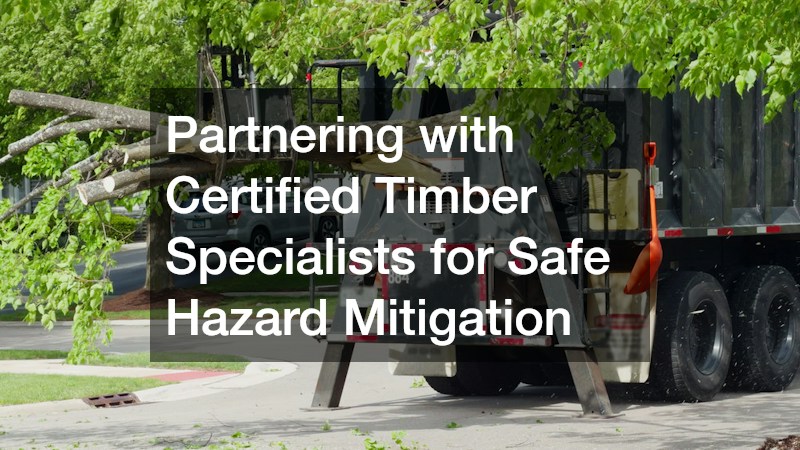
Large-scale tree removal on a residential parcel demands precise physics, technical rigging knowledge, and deep botanical understanding. A mature oak or maple can weigh tens of thousands of pounds, with massive lateral limbs extending over delicate shingles, glass skylights, and active utility connections. Attempting to drop such extensive structures without specialized training or professional rigging gear invites catastrophic impact damage and life-threatening job-site accidents.
Partnering with an established tree removal business guarantees that hazardous, dead, or structurally compromised trees are dismantled systematically under rigorous safety protocols. Certified operators conduct pre-work assessments to detect hidden internal rot, assess surrounding drop zones, and determine directional lean. They utilize high-tensile friction brakes, port-a-wraps, and rated arborist ropes to lower massive trunk sections to the turf with pinpoint control, preventing turf gouging and protecting surrounding landscape beds.
Working with an insured, certified organization protects property owners from personal injury liabilities and property damage claims. Professional crews operate with dedicated spotters, modern chipper trucks, and personal protective equipment compliant with all occupational safety regulations. Decisive, controlled timber extraction eliminates structural hazards while maintaining absolute site safety.
Scheduling Year-Round Canopy Health Checks and Vitality Audits
A tree’s exterior bark often masks advancing internal decay, hollow heartwood, or fungal pathogen colonization until an unexpected windstorm forces a catastrophic limb failure. Maintaining an overhead canopy requires scientific health evaluations, proactive structural pruning, and targeted root-zone treatments before structural weaknesses manifest as broken branches.
Investing in comprehensive tree services delivered by certified arborists ensures that every specimen on your property receives thorough crown inspections, deadwood thinning, and seasonal vitality audits. Arborists examine leaf color and density, inspect bark fissures for oozing bacterial cankers, and evaluate soil compaction across critical root zones. They employ deep-root liquid fertilization, micro-nutrient injections, and pneumatic soil decompaction to nourish trees from the root tips upward.
Regular arborist evaluations detect pest infestations—such as emerald ash borers or bark beetles—at the earliest stages of infestation, enabling effective systemic treatments that can save historic trees. Proactive crown thinning allows turbulent storm winds to pass harmlessly through the branches rather than wrenching limbs from the trunk. Systematic care extends the lifespan of valuable shade trees while protecting adjacent structures.
Executing Precision Sectional Dismantling in Confined Residential Spaces
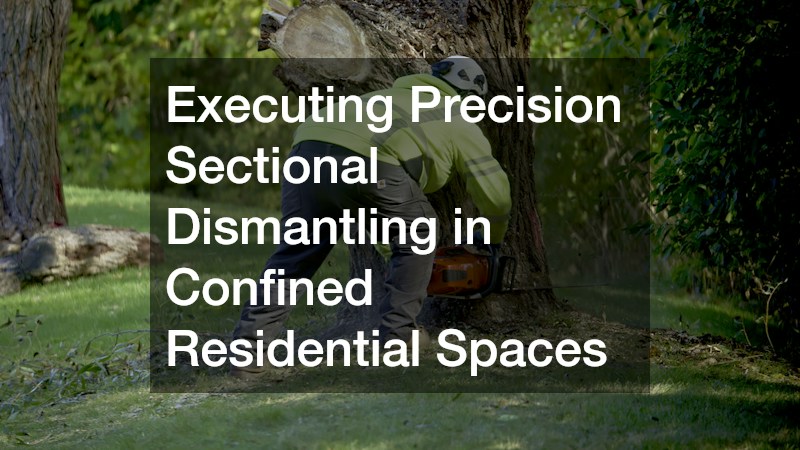
In dense residential developments, towering trees frequently grow in tight side yards, against exterior walls, or directly beneath overhead power drops where directional felling from the ground is impossible. Removing a dangerous tree in such constrained settings requires dismantling the timber section by section from the top down.
Executing technical tree cutting in tight quarters demands master-level aerial climbing skills and intricate rigging mechanics. Experienced climbers scale the tree using non-invasive rope saddles, setting canopy friction anchors that allow them to sever lateral branches piece by piece. Each segment is rigged to a ground crew that lowers the wood safely,ensuring no falling debris touches fence panels, patio pavers, or delicate garden features below.
Precision sectional cutting neutralizes high-risk trees in spaces inaccessible to standard bucket trucks. Skilled climbers use specialized cutting techniques—such as notch cuts and directional hinge wood—to guide every timber section precisely away from nearby structural targets. Controlled sectional dismantling provides an surgical solution for removing threatening trees from narrow residential spaces.
Deploying Heavy Aerial Rigging for High-Risk Structural Extractions
When an enormous tree dies, suffers severe storm splitting, or leans heavily over a residential roofline, traditional climbing methods become unacceptably hazardous. Rotted wood fibers cannot reliably support the weight of a climber or withstand the sudden dynamic shock loads generated by dropping heavy timber sections onto rigging lines.
Deploying a specialized tree crane service eliminates these structural risks by suspending both the arborist and the cut timber directly from a dedicated mobile crane boom. The crane hook secures the targeted limb or trunk section before the arborist makes a single cut. Once severed, the crane hoists the massive wood segment vertically up and over the home’s roofline, swinging it gracefully to a waiting processing area in the street or driveway.
Utilizing mobile hydraulic cranes speeds up large removals dramatically while keeping heavy equipment off sensitive residential lawns. Because wood sections are lifted away rather than dropped, the risk of structural impact damage to roofs, gutters, and patios is eliminated completely. Crane-assisted timber removal represents the safest, most efficient method for handling compromised trees in precarious locations.
Consulting Community Arbor Specialists for Rapid Storm Recovery
Severe weather—including microburst windstorms, heavy winter ice accumulations, and sudden tornadoes—can tear healthy trees apart in seconds. Uprooted root balls leave massive craters in lawns, split trunks hang suspended by thin splinters over driveways, and broken limbs tangle with live electrical wires, creating immediate neighborhood hazards.
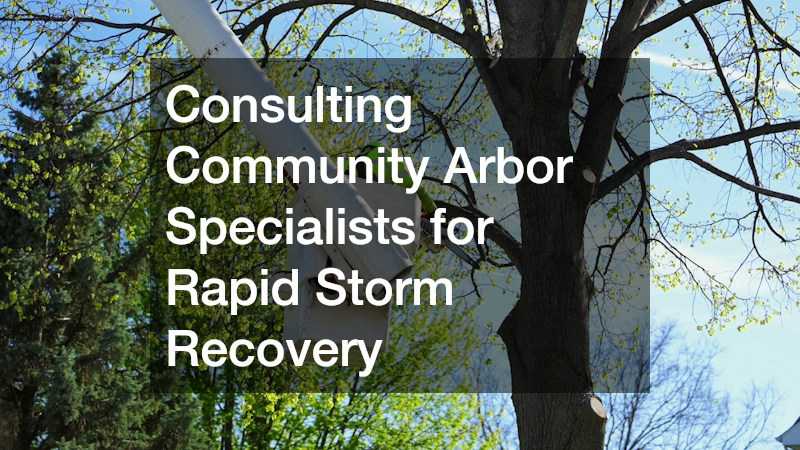
Consulting a responsive local tree service immediately following severe weather provides homeowners with rapid emergency stabilization and hazardous tree clearing. Established community crews possess intimate familiarity with regional municipal permitting requirements, local utility protocols, and common regional tree vulnerabilities. They mobilize emergency bucket trucks, heavy winches, and industrial brush chippers quickly, clearing blocked driveways and removing hanging limbs from roof structures safely.
Working with an established community enterprise ensures honest, transparent pricing during regional weather crises when out-of-town operators often appear. Local firms maintain lasting community reputations, provide detailed documentation for insurance adjusters, and manage complete site debris cleanup. Fast, professional local response restores household safety and peace of mind after extreme storms.
Evaluating Qualified Regional Contractors for Major Site Projects
Executing multi-phase property renovations—such as clearing building envelopes for room additions, thinning acres of overgrown woodland, or removing dozens of storm-damaged trees—requires substantial mechanical capacity, skilled labor, and rigorous management. Hiring unvetted contractors or independent laborers without verified insurance risks severe property damage and unfinished projects.
Evaluating established tree companies enables homeowners to review verified credentials, equipment fleets, worker compensation coverage, and commercial safety records transparently. Top-tier regional operations maintain diverse heavy equipment—such as knuckle-boom cranes, articulated loaders, high-capacity chippers, and tracked stump grinders. Their project coordinators provide detailed written estimates outlining scope of work, timeline milestones, and turf protection plans.
Partnering with an accredited regional enterprise guarantees that complex property clearing moves forward smoothly and meets municipal preservation ordinances. Professional firms take precautions to protect underground irrigation lines, septic drain fields, and paved surfaces by laying down composite ground-protection mats. Thorough contractor evaluation ensures exceptional workmanship, efficient operations, and complete financial security.
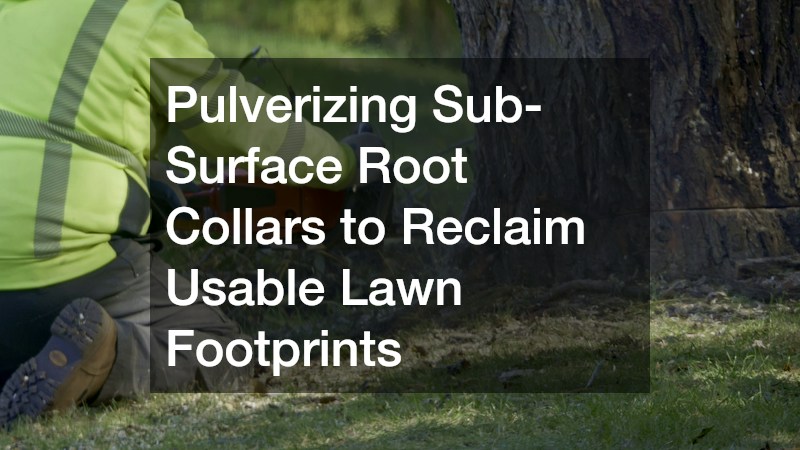
Pulverizing Sub-Surface Root Collars to Reclaim Usable Lawn Footprints
After a massive tree has been safely felled and hauled away, a wide, dense wood stump remains embedded in the soil, surrounded by extensive lateral root flares. Leaving tree stumps in place creates an unsightly eyesore, ruins lawn mower blades, and attracts subterranean termites, carpenter ants, and wood-decay fungi that can eventually spread to residential framing.
Executing thorough stump grinding utilizes heavy-duty tracked machines equipped with carbide-tipped cutting wheels that spin at high speeds, pulverizing the stump into fine wood chips. Professional technicians grind the wood collar down six to twelve inches below the surface, chewing through thick lateral roots and subterranean root flares. This mechanical grinding eliminates the stump core entirely, leaving a clean subterranean void ready for topsoil backfilling.
Grinding stumps below surface grade reclaims valuable yard space for new lawn sod, garden beds, or patio extensions. Pulverizing the stump stops root shoots from re-sprouting and prevents decaying wood from collapsing into dangerous sinkholes later. High-speed grinding restores a smooth, continuous lawn expanse that enhances overall property beauty.
Hiring Licensed Timber Extraction Crews to Guard Structural Foundations
Large trees growing too close to a house present hidden subterranean dangers alongside overhead canopy hazards. Expansive root networks pull immense volumes of moisture from surrounding clay soils during summer droughts, causing the ground beneath concrete footings to shrink and settle unevenly. Furthermore, expanding roots can press against basement walls, cracking mortar joints and compromising waterproofing layers.
Hiring certified tree removers to extract foundation-adjacent timber neutralizes underground structural risks before masonry damage occurs. Experienced crews assess foundation proximity, carefully excavating soil around critical root zones and using precision rigging to fell the tree without unsettling adjacent footings. They sever invasive surface roots cleanly and treat cut stumps with eco-friendly systemic inhibitors to prevent root regrowth beneath basement slabs.
Removing structurally hazardous trees protects concrete footings, prevents cracked basement walls, and stops root penetration into underground drainage tiles. Eliminating dense foliage directly against the house also allows fresh air and sunlight to dry exterior siding, preventing moss, mildew, and wood rot. Professional timber extraction preserves the integrity of your home’s foundation and exterior envelope.
Contracting Heavy Machinery Operators for Large-Scale Brush Clearing
Properties featuring neglected acreage, overgrown fence lines, or dense thickets of wild scrub require extensive mechanical intervention before practical landscaping can begin. Manual clearing using hand chainsaws and brush cutters is physically exhausting, slow, and leaves behind messy brush piles that take months to decay or require open burning.
Contracting specialized local land clearing services provides homeowners with heavy mechanical power—such as forestry mulchers, excavators equipped with root rakes, and industrial brush hogs—to clear thick underbrush quickly. Experienced heavy machinery operators clear invasive buckthorn, honeysuckle, and unwanted saplings flush with the ground, grinding woody material into a fine mulch layer in a single pass. They selectively preserve specimen shade trees while clearing out scrub growth.
Investing in mechanical land clearing transforms impenetrable brush into open, usable parkland within days. Grinding brush on-site prevents topsoil erosion, enriches the soil with organic matter, and eliminates expensive debris hauling fees. Heavy mechanical clearing provides an efficient, cost-effective blank canvas for expanding lawns, installing outdoor living areas, or creating private walking trails.
Sourcing Healthy Native Saplings from Established Cultivation Grounds
A comprehensive canopy management plan involves more than just removing hazardous or declining trees; it requires planting resilient young trees to preserve environmental canopy benefits for the future. Purchasing weak, root-bound saplings from general big-box retail stores often leads to stunted growth, disease susceptibility, and early tree death.
Sourcing replacement trees directly from reputable tree nurseries ensures that new plantings are healthy, biologically robust, and well-suited to your regional climate and soil chemistry. Commercial nurseries cultivate specimens with well-developed, non-circling root systems, balanced branch scaffold architecture, and clear central leaders. Their staff can guide you toward native hardwood or evergreen varieties that offer natural resistance to local pests, withstand seasonal drought, and mature into magnificent shade trees.
Building a safe, resilient, and enduring residential setting requires organizing canopy health evaluations, precision sectional tree cutting, crane-assisted removals, stump grinding, mechanical land clearing, and thoughtful replanting into a cohesive, long-term property strategy. Viewing overhead timber as an evolving asset rather than an unmanaged liability protects your home against falling limb damage, foundation subsidence, and destructive root infiltration. Combining scientific pruning and timely hazard removals with modern mechanical land clearing and healthy native replanting creates a balanced, sunlit outdoor environment that elevates household enjoyment and significantly enhances real estate value.
