
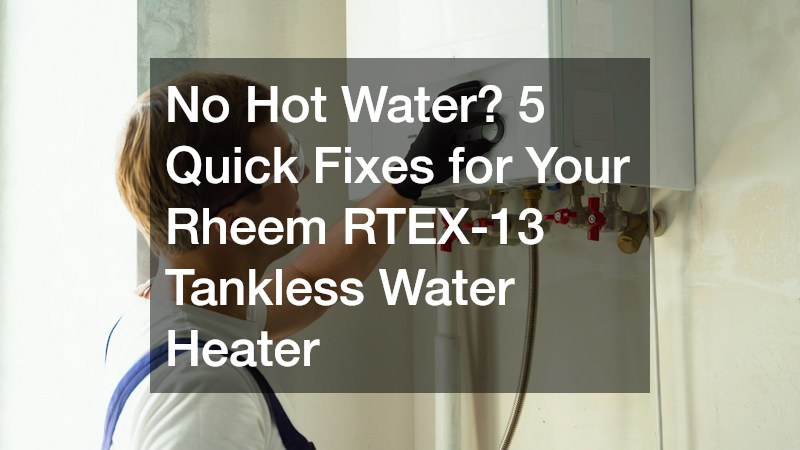
In this comprehensive article, we will explore effective solutions to common issues encountered with the Rheem RTEX-13 Tankless Water Heater. Recognizing challenges before they escalate can be crucial in maintaining an unyielding supply of hot water.
Why Isn’t My Rheem RTEX-13 Producing Hot Water?
When your Rheem RTEX 13 electric tankless water heater isn’t producing hot water, the power supply could be the culprit. Ensuring a stable electrical connection and verifying circuit breaker settings is fundamental to keeping the unit functional.
The RTEX-13 requires a double-pole 60-amp breaker and 6-gauge wiring; any voltage drop or loose wiring connection can prevent the heavy-duty copper heating elements from engaging properly.
Problems can often arise from overlooked electrical issues such as loose terminal block connections or tripped breakers. Checking these elements regularly can save time and prevent major inconveniences.
Flow rate settings also play a crucial role in the water heating process. Adjusting these to fit your household needs can enhance performance and efficiency immensely. Because tankless units rely on an internal flow sensor with a minimum activation threshold (typically 0.3 GPM), low fixture output or restrictive aerators won’t trigger the heating elements.
In some cases, inadequate flow rates stem from clogged inlet screen filters or undersized plumbing, prompting a thorough system inspection. Addressing these adjustments can bring your water heater back to peak functionality without requiring extensive intervention.
How Do I Detect and Fix Error Codes?
Error codes on your RTEX-13 can initially seem daunting, yet understanding them is key to troubleshooting. Most issues can be swiftly diagnosed through the simple digital display readout on your unit. Codes like E1 or E2 often point directly to temperature sensor faults, thermistor open/short circuits, or extreme internal overheating.
An informed approach towards common error codes uncovers insights into potential malfunctions and irregularities. Being familiar with these indicators equips you to tackle minor issues independently.
Tackling error codes effectively requires patience and a systematic approach to problem-solving. Initiating a straightforward reset process—turning off the main power breaker for 60 seconds before restarting—or consulting the user manual can resolve many temporary logic faults.
However, not all errors can be resolved with quick fixes, hinting that complex malfunctions might lurk beneath surface symptoms. Implementing manufacturer-recommended solutions ensures you address these issues comprehensively.
What Maintenance Does My Rheem RTEX-13 Require?
Maintenance is essential in prolonging the lifespan and functionality of your heater, starting with regular flushing procedures. To prevent severe scale build-up—especially in hard water areas—a systemic cleanse using food-grade white vinegar and a small submersible pump every 6 to 12 months is advisable.
Over time, mineral deposits accumulate on the heating elements, significantly impeding the heater’s ability to transfer heat and deliver a consistent hot water supply. Flushing eliminates sediment and scale, ensuring water flow is not compromised.
Additionally, inspections of internal cold-water inlet strainers and electrical heating elements should not be neglected. Catching potential blockages early helps maintain efficient heat transfer and averts costly element burnouts caused by neglected upkeep.
By incorporating these routine checks into your maintenance regimen, it’s easier to preserve the heater’s health and operation. Such diligence rewards you with fewer disruptions and related frustrations.
When Should I Call a Professional?
Knowing when to seek professional help is as important as performing regular maintenance. Certain issues, especially those involving high-voltage 240V electrical connections, control board replacement, or replacing damaged internal heating elements, are best handled by licensed experts.
Intricate problems may present themselves as subtle performance declines, requiring diagnostic tools like multimeters and specialized technical knowledge not typically available to the layperson. Experts possess the skills necessary to navigate these safety hazards safely.
The benefits of professional maintenance extend beyond immediate repair. Scheduled check-ups by certified technicians lead to improved efficiency and natural longevity of your tankless water heater.
Additionally, professionals can provide insights into best practices tailored to your specific household water usage patterns and local water hardness levels. This guidance ensures the heater operates at maximum energy efficiency, offering peace of mind and reduced electricity bills.
Keeping your Rheem RTEX-13 in pristine condition doesn’t have to be a daunting task. With these quick fixes and preventative measures, you can ensure a continuous flow of hot water in your home. However, don’t hesitate to seek professional help when necessary, ensuring peace of mind and prolonging the lifespan of your water heater.
