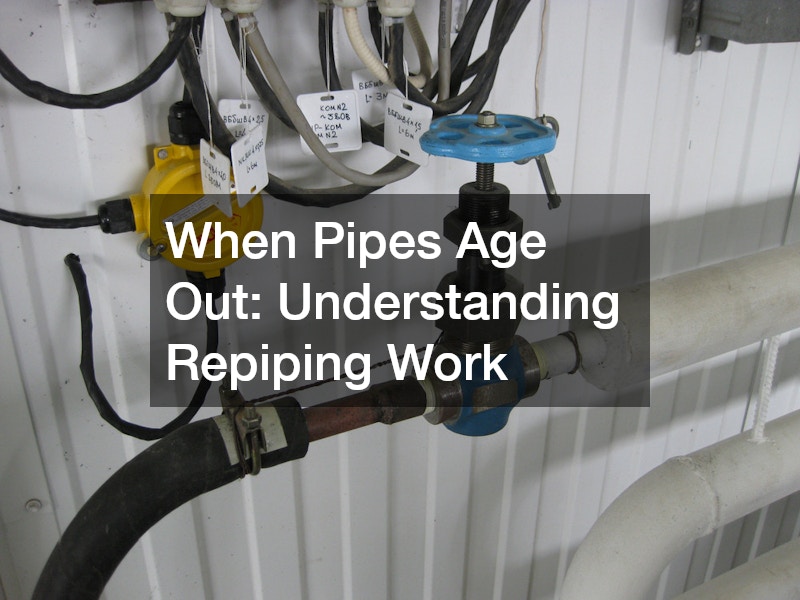
Plumbing systems are built to last for years, but not forever. As pipes age, they begin to show signs of wear that can affect water quality, pressure, and reliability. In older homes especially, deterioration inside the plumbing system can become widespread rather than isolated.
Repiping is the process of replacing sections or the entire network of pipes within a home. It is often considered when repairs are no longer enough to maintain consistent performance across the system.
Signs a Home May Need Repiping
Pipe issues do not always start with obvious failures. Many homeowners first notice gradual changes in water performance or recurring plumbing problems.
Common indicators that repiping may be needed include:
- Frequent pipe leaks in different areas of the home
- Rust-colored or discolored water
- Consistently low water pressure
- Strange metallic taste or odor in water
- Visible corrosion on exposed piping
When these issues appear across multiple fixtures, it often points to a system-wide concern rather than a single repair need.
What Causes Pipes to Deteriorate
Several factors contribute to the breakdown of plumbing systems over time. Older materials such as galvanized steel or certain early copper systems can corrode internally. Mineral buildup from hard water can also restrict flow and weaken pipe walls.
Environmental factors like shifting foundations or temperature changes may place stress on joints and connections. Over time, these conditions make repiping a practical long-term solution.
What Repiping Involves
Repiping is a structured process designed to replace outdated or failing plumbing lines with modern materials. The goal is to restore full system performance while minimizing disruption to the home.
The process typically includes:
- Evaluating the existing plumbing system
- Mapping pipe routes throughout the home
- Removing or bypassing old piping where needed
- Installing new supply lines using updated materials
- Testing the system for pressure and flow consistency
Modern materials such as PEX or copper are commonly used due to their durability and reliability.
How Repiping Improves System Performance
Once a home has been repiped, the difference in performance is often noticeable. Water flow becomes more consistent, leaks are reduced, and overall system reliability improves.
Benefits of repiping can include:
- Cleaner and clearer water supply
- Stronger and more stable water pressure
- Reduced likelihood of recurring leaks
- Improved plumbing efficiency across fixtures
- Greater long-term system reliability
Repiping also helps eliminate hidden issues that may have been developing within older pipes.
Planning and Project Scope
Repiping is a more involved plumbing project, and planning plays an important role in the process. The size of the home, accessibility of existing pipes, and layout of the plumbing system all influence the approach.
Professional evaluation helps determine whether full or partial repiping is needed and ensures the work is completed efficiently with minimal disruption to daily routines.
Materials Commonly Used in Repiping
Modern repiping projects typically use materials designed for durability and long service life. The most common options include:
- PEX piping, known for flexibility and resistance to corrosion
- Copper piping, valued for strength and long-term performance
- CPVC in certain applications for cost-effective replacement
The choice of material depends on the home’s structure and plumbing requirements.
Rebuilding the System Behind the Walls
Repiping is not just a repair solution. It is a way to restore the foundation of a home’s water system when aging pipes can no longer keep up with demand. New pipes mean fewer surprises behind the walls and steadier flow at every tap.